phdream Probability in Casino Games
Understanding Probability in phdream Casino Games: Your Key to Informed Online Betting
Welcome to phdream, the premier online betting platform designed for the vibrant Philippines market. In the thrilling world of online casino games, understanding probability isn't just an academic exercise; it's a fundamental tool that empowers players to make informed decisions and enhance their gaming experience. Whether you're a seasoned bettor or new to the excitement of online casinos, grasping the basic principles of probability can significantly impact how you approach games, manage your bankroll, and ultimately, your enjoyment. This comprehensive guide will delve into what probability means in the context of casino gaming, how it influences your chances, and how you can use this knowledge to your advantage. From the spinning reels of slots to the strategic decisions in poker, probability is the invisible force at play. Join us as we demystify the odds and help you navigate the exhilarating landscape of online betting with greater confidence and insight. Prepare to transform your approach to casino games, moving beyond mere luck to a more strategic and informed style of play.
Table of Contents
- What is Probability in Casino Games?
- The House Edge: Understanding the Casino's Advantage
- Calculating Your Chances: Basic Probability in Action
- Probability in Popular Casino Games: Examples and Insights
- Strategies for Smarter Betting: Beyond Pure Luck
- Responsible Gaming: A Probabilistic Approach
What is Probability in Casino Games?
Probability, in its simplest form, is the mathematical chance of an event occurring. In the realm of casino games and online betting, it quantifies how likely it is that you will win a particular hand, spin, or roll. This concept is foundational to every game offered at phdream, from the simplest slot machines to complex card games. Understanding probability allows players to move beyond just hoping for a win and instead appreciate the underlying mechanics that govern outcomes. It's not about predicting the future, but rather understanding the likelihood of various outcomes based on the game's rules and structure.
For instance, if you flip a fair coin, the probability of it landing on heads is 1/2, or 50%. This simple example illustrates that probability is expressed as a fraction, decimal, or percentage, representing the ratio of favorable outcomes to the total number of possible outcomes. In casino games, these calculations become more intricate, involving multiple variables such as the number of cards in a deck, the slots on a roulette wheel, or the combinations on a dice roll. While individual game outcomes are random, the probabilities associated with them are fixed and can be calculated. This mathematical certainty is what allows casinos to operate profitably, and what gives informed players an edge in understanding their true chances. At phdream, we believe in transparency and empowering our players with knowledge, making probability a key concept for anyone engaging with our casino games.
The concept of probability also extends to the long-term expectation of a game. While you might win or lose in the short term due to variance, probability dictates what will happen over thousands or millions of plays. This long-term outlook is crucial for understanding concepts like the house edge, which we will explore next. Familiarizing yourself with these basic principles is the first step towards a more strategic and enjoyable online betting experience, especially for players in the Philippines market looking for an edge.
The House Edge: Understanding the Casino's Advantage
The house edge is arguably the most critical concept derived from probability in casino gaming. It represents the mathematical advantage a casino has over players in any given game, ensuring its long-term profitability. Expressed as a percentage, the house edge indicates the average percentage of every bet that the casino expects to keep over an extended period. For example, if a game has a 2% house edge, it means that for every 100 PHP wagered, the casino expects to profit 2 PHP in the long run.
This advantage is built directly into the rules and payouts of each game. It's not about cheating; it's a fundamental aspect of how casinos operate. In roulette, for instance, the presence of the single or double zero slots gives the house its edge, as these slots are not covered by standard bets that pay out even money. Similarly, in blackjack, the house gains an edge from players having to act before the dealer, among other rule variations. Understanding the house edge is paramount because it informs you about the true profitability of a game over time. Games with a lower house edge generally offer better long-term returns for players, although short-term results can always vary wildly due to luck.
At phdream, just like any legitimate online betting platform, games are designed with a house edge. This allows us to provide a sustainable and exciting gaming environment, complete with generous promotional offers and a top-tier mobile app experience. Knowing the house edge for different casino games helps you make strategic choices about where to place your bets. Some games, like blackjack (with optimal strategy), might have a house edge under 1%, while others, such as certain slot machines, could have an edge of 5% or more. Being aware of these figures can guide your game selection and help you manage your expectations, ensuring a more responsible and enjoyable gaming journey with phdream.
Calculating Your Chances: Basic Probability in Action
While you don't need to be a mathematician to enjoy phdream casino games, understanding how basic probability is calculated can significantly deepen your appreciation for the games. The fundamental formula for probability is: P(Event) = (Number of Favorable Outcomes) / (Total Number of Possible Outcomes). Let's look at a few common examples to illustrate this.
Roulette
Consider a European Roulette wheel, which has 37 pockets: numbers 1-36 and a single zero (0). If you bet on a single number, there is 1 favorable outcome (your number hits) out of 37 possible outcomes. So, the probability of hitting a single number is 1/37, or approximately 2.7%. If you bet on red (18 red numbers), the probability is 18/37, or about 48.65%. The slight difference from 50% (due to the zero) is where the house edge comes from. This simple calculation helps you understand why the payout for a single number is much higher than for red/black bets.
Dice Games (Craps)
When rolling two standard six-sided dice, there are 6 x 6 = 36 possible outcomes. Each outcome (e.g., 1 and 1, 1 and 2, etc.) is equally likely. To find the probability of rolling a specific sum, you count the combinations that yield that sum. For example, to roll a 7, the combinations are (1,6), (2,5), (3,4), (4,3), (5,2), (6,1) – that's 6 favorable outcomes. So, the probability of rolling a 7 is 6/36 = 1/6, or approximately 16.67%. Understanding these combinations is crucial for making informed bets in games like Craps.
Card Games (Blackjack)
In blackjack, probability becomes dynamic as cards are dealt. If you're dealt a 10 and a 6 (total 16), and the dealer shows a 7, you need to decide whether to hit or stand. Knowing the probability of drawing a card that busts you (goes over 21) versus a card that improves your hand without busting is key. With a standard 52-card deck, there are 16 cards (10s, Jacks, Queens, Kings) that would give you a 26, busting you. There are also 4 Aces, 4 Twos, 4 Threes, 4 Fours, 4 Fives. If you have 16, and the dealer has a 7, you know the approximate probability of drawing a 5 or less to improve your hand. This constant recalculation, even if intuitive, is probability in action and helps players make optimal decisions, especially when playing live casino games on the phdream mobile app.
By applying these basic calculations, players can gain a clearer picture of their chances in various casino games and understand the risk-reward ratio of different bets. This knowledge is invaluable for anyone serious about online betting.
Probability in Popular Casino Games: Examples and Insights
Let's explore how probability manifests in some of the most popular phdream casino games, providing insights that can help you play smarter and make the most of our promotional offers.
Slot Machines
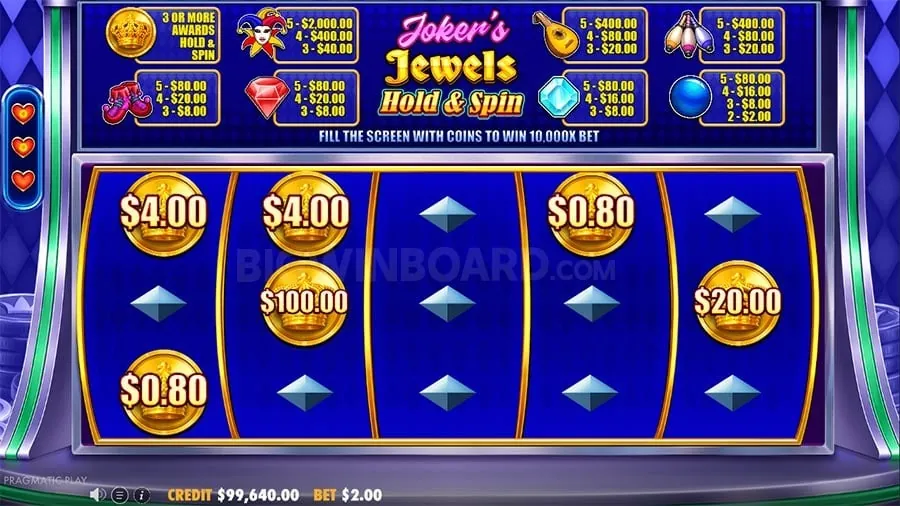
Slot machines are perhaps the most popular casino games, both online and in physical casinos. Their outcomes are determined by a Random Number Generator (RNG), which constantly cycles through millions of numbers per second. When you hit the spin button, the RNG stops at a specific number, which corresponds to a particular combination of symbols on the reels. The probability of hitting a specific winning combination, especially a jackpot, is very low, often in the millions. This is why jackpots are so rare but offer massive payouts. The Return to Player (RTP) percentage, often cited for slots, is a long-term probability measure indicating the percentage of all wagered money a slot machine will pay back to players over time. An RTP of 96% means that, on average, for every 100 PHP wagered, the machine will return 96 PHP. This doesn't guarantee you'll win 96 PHP on every 100 PHP played, but it's the expected return over millions of spins. Always look for slots with higher RTPs on phdream for better long-term prospects.
Blackjack
Blackjack is unique because player decisions directly influence the probability of winning. Unlike slots, it's not purely a game of chance. With basic strategy, players can reduce the house edge significantly, often to less than 1%. Basic strategy involves making the mathematically optimal decision (hit, stand, double down, split) for every possible hand combination against the dealer's upcard. This strategy is derived from complex probability calculations that determine the highest likelihood of winning or pushing, or the lowest likelihood of losing. For example, knowing when to hit on a soft 17 or stand on a hard 16 is all about probability. The more decks used, the slightly higher the house edge, but even with multiple decks, optimal play remains key.
Roulette
As discussed, roulette probabilities are fixed based on the number of slots on the wheel. European Roulette (single zero) offers better odds than American Roulette (single and double zero) because it has a lower house edge (2.7% vs. 5.26%). Understanding these differences allows players to choose tables that offer a better probabilistic return. Bets like red/black or odd/even have close to 50% probability (minus the zero effect), while betting on a single number has a much lower probability but a higher payout. The choice depends on your risk tolerance and preferred payout structure.
Poker (Video Poker & Live Poker)
In Video Poker, probability is constant because you're playing against a fixed paytable and a simulated deck. Knowing the probabilities of drawing specific cards to complete a winning hand (e.g., a straight or a flush) is crucial for making optimal decisions on which cards to hold. In live poker, probability becomes even more dynamic, influenced by your opponents' actions and the cards dealt. Calculating 'pot odds' (the ratio of the current pot size to the cost of calling a bet) against the probability of improving your hand is a fundamental poker skill. This allows you to determine if calling a bet is mathematically profitable in the long run. Mastering these probabilistic calculations is essential for success in poker at phdream.
By understanding these game-specific probabilities, players can approach online casino games not just as entertainment, but as an opportunity for strategic engagement, especially through the convenient phdream mobile app in the Philippines market.
Strategies for Smarter Betting: Beyond Pure Luck
While probability inherently means that luck plays a role in short-term outcomes, applying strategic thinking based on probabilistic understanding can significantly improve your long-term betting experience at phdream. Here are some practical tips and strategies for smarter online betting:
1. Choose Games with Lower House Edge
As discussed, the house edge is your primary adversary. Games like Blackjack (with optimal strategy), certain Video Poker variants, and European Roulette typically offer lower house edges compared to Keno or some specific slot machines. Prioritizing these games, especially when combined with phdream's promotional offers, can give you a better mathematical chance of retaining your bankroll and potentially winning over time. Always research the RTP and house edge of games before you play.
2. Master Basic Strategy (for applicable games)
For games like Blackjack, mastering basic strategy is non-negotiable. This strategy isn't based on gut feelings but on statistical probability. It tells you the best move to make for every possible hand combination against the dealer's upcard, minimizing the house edge to its lowest possible point. There are countless charts available online; practice them diligently on the phdream mobile app before playing with real money.
3. Understand Variance
Probability dictates long-term averages, but short-term results are subject to variance. You can play a game with a low house edge and still lose several times in a row, or hit a big win on a high house edge game. Understanding variance helps manage expectations and prevents chasing losses. Your bankroll management strategy should account for periods of losing streaks, which are statistically inevitable. Don't let short-term losses dictate irrational decisions.
4. Utilize Promotional Offers Wisely
phdream frequently offers bonuses and promotions. While these can boost your bankroll, always read the terms and conditions. Wagering requirements, for instance, dictate how many times you must bet the bonus amount before you can withdraw winnings. Factor these into your probabilistic assessment; a large bonus with impossible wagering requirements might not be as good as a smaller one with more achievable terms. These offers are especially attractive to our players in the Philippines market.
5. Practice Bankroll Management
This is crucial. Set a budget for your online betting activities and stick to it. Never bet more than you can afford to lose. Divide your bankroll into smaller units and set limits on how much you're willing to wager per session or per day. This approach, while not changing game probabilities, protects you from significant financial losses and ensures that your gaming remains a form of entertainment. Successful players understand that managing money is as important as understanding the odds.
6. Avoid Betting Systems Based on Fallacies
Many betting systems (like the Martingale) are based on the gambler's fallacy – the mistaken belief that past outcomes influence future independent events. For example, if a coin lands on heads ten times in a row, the probability of it landing on heads again on the eleventh flip is still 50%. These systems can lead to rapid bankroll depletion because they don't alter the underlying probabilities or the house edge. Stick to strategies that are mathematically sound and grounded in true probability.
By integrating these strategies into your approach, you can transform your phdream online casino experience into a more informed, controlled, and potentially rewarding endeavor.
Responsible Gaming: A Probabilistic Approach
Understanding probability in phdream casino games isn't just about winning; it's also about fostering a responsible and sustainable approach to online betting. Responsible gaming is a core value at phdream, and knowledge of probability is a powerful tool in achieving it.
The most important aspect of responsible gaming from a probabilistic perspective is recognizing the house edge. Since every casino game